
Rental Listing Scams: How They Work and How to Check a Listing Before You Pay
You find an apartment that’s a little nicer than the others and a little cheaper. The person who answers is friendly and quick. There’s a lot of interest, they say, so a deposit today would hold it for you. You’d like to see it first, but they’re out of town this week.
Nothing in that exchange is unusual on its own. Together, it’s the outline of the most common way renters lose money before they ever get a key. This guide walks through how these scams are built, what the Federal Trade Commission’s own reports say about them, and a short set of checks that stop nearly all of them.
How big the problem is
The Federal Trade Commission (FTC) collects fraud reports from the public, and in December 2025 it published a Data Spotlight on rental scams. According to that report, people have reported nearly 65,000 rental scams to the agency since 2020, with about $65 million in losses. The median reported loss was $1,000.
Two cautions about those numbers. They count only people who filed a report with the FTC, and most people who are scammed never do, so the real totals are higher. And a median of $1,000 means half of the people who lost money lost more than that. For someone putting together a deposit and first month’s rent, that can be the whole moving budget.
Who gets hit, and where it starts
The FTC report is specific on both points. People aged 18 to 29 were three times more likely than other adults to report losing money to a rental scam. In the twelve months ending in June 2025, that age group accounted for 46 percent of the reports that involved a loss; people in their thirties made up another 23 percent.
That isn’t because younger renters are careless. They move more often, they’re more likely to be renting for the first time, and they’re more likely to be searching from another city for school or a first job, which is exactly when you can’t walk over and look at the place.
As for where it starts: in that same twelve-month period, about half of the people who reported a rental scam and named a platform said it began with a fake ad on Facebook. Another 16 percent said it began with a fake listing on Craigslist. The lesson isn’t to avoid those sites. It’s that a listing appearing on a site you know tells you nothing about who posted it.
The two kinds of fake listing
The FTC’s consumer guidance on rental listing scams describes two basic versions.
The hijacked listing. The home is real and may really be for rent or for sale. The scammer copies the photos and the description from the genuine ad, swaps in their own contact details, and reposts it somewhere else, usually at a lower price. Everything about the place checks out because the place exists. Only the person you’re talking to is fake.
The listing for a home that isn’t available. The scammer advertises a place that isn’t for rent, or that doesn’t exist at all. The photos come from somewhere else and the address may be invented or belong to someone who has no idea it’s being advertised.
The first kind is harder to spot, and it’s why “the address is real” and “the photos look right” are not enough on their own.
Four moves scammers make once you reply
The Data Spotlight groups what people reported into a handful of patterns. They can show up alone or one after another in the same conversation.
1. Money before you’ve seen the place
This is the classic. You’re asked for an application fee, a security deposit or the first month’s rent to hold the property, before you’ve been inside. There’s always a reason you can’t see it yet and always a reason to hurry. Once the money is sent, the person stops answering.
2. The $1 credit check
Here the “landlord” asks you to prove your credit by sending a screenshot of your score, and helpfully sends a link to a site where you can get one, often for a dollar. According to the FTC, people may not realize that signing up enrolls them in a paid membership with recurring charges, or that the scammer earns a fee for each sign-up. No apartment is involved at any point. The listing exists to generate those enrollments.
3. The application that harvests your identity
Some scammers aren’t after a deposit. They send an application asking for your Social Security number, a photo of your driver’s license, pay stubs and other personal details. That’s a complete kit for opening accounts in your name. This one costs nothing up front, which is why it doesn’t feel like a scam while it’s happening.
4. The self-guided tour
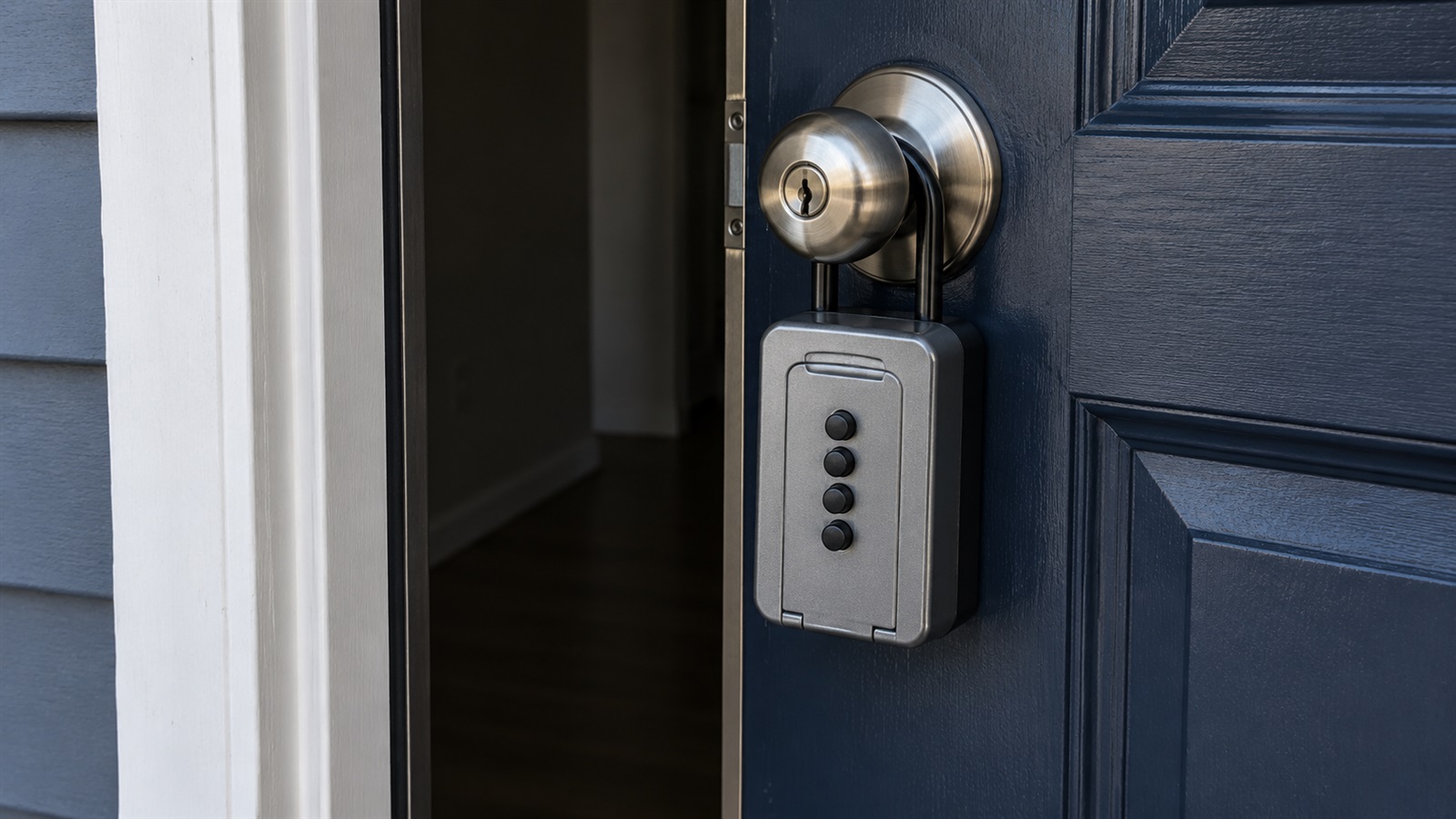
This is the one that defeats the usual advice to see the home in person. Some landlords let prospective tenants tour a vacant home alone, using a code that opens a lockbox with the keys. Scammers copy those listings and then send you the code, or tell you how to get one. You walk through a real, empty home, and it feels verified. Then you pay someone who has no connection to it.
The FTC notes that scam warnings posted inside some of these homes have tipped people off. If you tour a home on your own, read anything taped to the door or the counter, and treat having been inside as proof of nothing about the person you’ve been messaging.
Seven checks before any money moves
None of these takes more than a few minutes. Together they cover every pattern above.
- Search the address. Paste the full address into a search engine. If the same home shows up with a different price or different contact details, the FTC says it’s likely a scam. If it shows up for sale and not for rent, that’s a major warning sign.
- Search the photos. Run a reverse image search on two or three of the pictures. A hijacked listing leads you straight to the original ad, often on a property manager’s own site.
- Compare the rent with the area. A price well under everything nearby is the bait. One free reference is the federal government’s own benchmark for your county; we explain how to read it in our breakdown of the FY 2027 Fair Market Rents. It won’t tell you what a specific apartment should cost, but it shows quickly when an offer sits far below the local range.
- Find out who owns it. County property records are public and usually searchable online by address. The owner’s name should match the person or company you’re dealing with, or that company should be able to show it manages the building.
- Contact the manager through a channel you found yourself. Look up the property management company independently and call the number on its own website, not the one in the ad. Ask whether that unit is available and at what price.
- Hold back your personal information. The FTC’s guidance is that until you’ve agreed to rent a place, a landlord doesn’t need your Social Security number or credit score, and that legitimate landlords normally run the credit check themselves. If you’re sent a link to buy your own, stop there.
- Look at how you’re being asked to pay. The FTC lists wire transfers, gift cards and cryptocurrency as the payment methods to refuse. They’re hard to trace and close to impossible to reverse, which is why scammers ask for them.
And one that isn’t a check so much as a rule: if someone pushes you to decide right now to keep a great deal, the FTC’s advice is to walk away. A real landlord with a good apartment doesn’t need you to skip the viewing.
“But I’m moving from another city”
This is where most of the risk sits, because you can’t do the obvious thing. A few ways to close the gap:
- Ask for a live video walkthrough, not a recorded one. Have the person open the front door from outside, show the street and the building number, then walk through. A recorded tour can be copied from the original listing; a live one can’t.
- Send someone. A friend, a relative, a future coworker, or your school’s housing office if you’re a student. Ten minutes of someone standing in the unit with the agent is worth more than any number of photos.
- Prefer buildings with a leasing office and a company website over individual listings you can’t trace to anyone.
- If none of that is possible, book somewhere short-term for the first weeks and sign a lease once you’ve arrived. It costs more. It costs less than a lost deposit and no apartment.
What a legitimate process usually looks like
It helps to know the normal order of things, because a scam almost always scrambles it. In an ordinary rental, you see the home, or someone sees it for you. You fill in an application and the landlord or manager screens you, sometimes charging an application fee that state law may limit. You’re approved. You receive a written lease and have time to read it. Then you pay the deposit and first month’s rent, by a method that leaves a record, and you get a receipt and the keys.
Payment comes near the end. When it’s moved to the front, before a viewing, before approval, before a lease, ask why. There’s rarely a good answer.
If you’ve already paid
Speed matters more than anything else here, and the first call depends on how you paid.
- Card or bank transfer: contact your bank or card issuer immediately, say the payment was fraudulent, and ask them to reverse or dispute it.
- Payment app: report it in the app and to the bank or card linked to it.
- Wire transfer: call the wire company or your bank and ask whether the transfer can still be stopped.
- Gift card: call the card’s issuer with the card number and your receipt, and ask whether any balance can be frozen.
Then report it. The FTC’s guidance names four places: the FTC itself at ReportFraud.ftc.gov, your local law enforcement, the website where the ad was posted, and your state attorney general. A report rarely brings the money back, and it’s fair to know that going in. What it does is get the listing taken down and add to the record that agencies use to go after the people behind it.
If you sent a Social Security number or a copy of your ID, treat it as identity theft even if you paid nothing. The federal government’s recovery site, IdentityTheft.gov, builds a step-by-step plan, and placing a free fraud alert or credit freeze with the credit bureaus limits what can be opened in your name.
Three questions renters ask
Is it a scam if the landlord asks for an application fee? Not by itself. Application fees are common and legal in most places, within limits that vary by state. The warning sign is being asked to pay it before you’ve seen the home or to someone you can’t verify.
The landlord says they’re abroad and will mail the keys. Is that ever real? Owners do live elsewhere, but they hire a local manager or agent who can show the home and hand over keys. An owner who can’t show the place, has nobody local, and wants payment first is describing the scam, not an exception to it.
I toured the home with a lockbox code. Doesn’t that prove it’s legitimate? No. It proves the home is vacant and that someone had a code. Confirm the listing with the company named on the lockbox or the sign, using a phone number you looked up yourself.
The one-minute version
If you remember nothing else: search the address, confirm who you’re dealing with through a contact you found on your own, and don’t pay or hand over your Social Security number until you’ve seen the home and have a lease in front of you. Every scam in the FTC’s report depends on getting you to skip one of those three.
Check a listing: rental scam red flags
Tick everything that applies to the listing you are looking at. Nothing you tick is saved or sent anywhere.
Based on the warning signs the Federal Trade Commission describes for rental listing scams. A clean result does not prove a listing is genuine. To report a scam, go to ReportFraud.ftc.gov.
Sources
- Federal Trade Commission, Data Spotlight: Rental scams hit home with $65 million in reported losses (December 2025): the number of reports and losses since 2020, the median loss, the age figures, the share of scams starting on Facebook and Craigslist, the four patterns described above, and the advice on searching the address, sharing personal information and comparing rents.
- Federal Trade Commission, Rental Listing Scams: the two kinds of fake listing, the payment methods to refuse, and where to report.
- IdentityTheft.gov: the federal recovery steps if your personal information was taken.
Sources checked on October 5, 2026. This article is general information, not legal advice; see our Disclaimer.
